Vancouver’s climate rarely conjures images of drought, yet summers have grown hotter and drier with longer stretches between meaningful rainfall. For homeowners and property managers the question is practical: how do you keep a garden that looks intentional, supports biodiversity, and uses far less water than a traditional lawn? I’ve designed and overseen dozens of projects across Greater Vancouver, from compact Kitsilano courtyards to sloped yards in Burnaby. The patterns repeat. A little upfront planning and the right plant palette can cut summer irrigation by half or more while producing a landscape that feels lush, not parched.
Why drought-tolerant landscaping fits Vancouver’s neighborhoods Rainfall totals still favor the wet half of the year, but seasonal distribution is shifting. Many properties rely on municipal water for summer irrigation, so homeowners face higher bills and occasional watering restrictions. Drought-tolerant landscapes reduce dependence on treated water, lower maintenance demands, and often come with better curb appeal. For rentals or strata buildings, less lawn means lower ongoing costs and fewer seasonally hired gardeners.
I’m deliberate when I say drought-tolerant, not xeric. A drought-tolerant design for Vancouver accepts that soils will be moist through much of autumn to spring. It focuses on plants that can handle a dry spell of several weeks in summer without significant decline, plus soil and hardscape choices that minimize evaporative loss. The result is an adaptive garden that performs under the region’s realities.
Core principles that guide every successful design Start with soil. Vancouver’s urban soils vary wildly—some sites are deep, friable loams, others are compacted fill. Improving topsoil with compost and avoiding unnecessary tilling gives plants a fighting chance. Mulch everything. A 5 to 8 cm layer of coarse mulch reduces surface evaporation, moderates soil temperature, and suppresses weeds. Place mulch under shrubs and perennials but keep it pulled back slightly from trunks to prevent rot.
Think layer, not lawn. Replace monoculture turf with a mix of groundcovers, ornamental grasses, shrubs, and small trees. Layering provides visual interest and reduces bare soil that dries out quickly. Group plants by water needs, creating hydrozones so each section receives appropriate irrigation or none at all after establishment.
Right plant, right place. Exposing a moisture-loving plant to full summer sun is a recipe for stress. Assess microclimates on the property—south-facing borders, sheltered courtyards, windy ridge tops—and select species that thrive there. A sheltered courtyard may tolerate Mediterranean shrubs; a wind-exposed slope needs tough, low forms.
Invest in irrigation for establishment. Even the most drought-tolerant species need water the first two summers while roots develop. A simple drip system with a timer, or hand watering every 7 to 10 days during dry spells, usually suffices. After year two, many sites will need minimal supplemental irrigation.
Drought-friendly plant palette for Vancouver BC Below are five plants I use repeatedly because they are resilient, widely available from local nurseries, and offer season-long interest.
Lavender angustifolia varieties Lavender handles full sun and reflected heat; it tolerates richer coastal soils if they drain well. Planted on a slight rise or in raised beds it resists crown rot. Expect fragrant flower spikes from late spring into summer, pollinators in droves, and a shrub that rebounds from occasional summer dryness without fertilizer.
Oemleria cerasiformis - indian plum A native that resprouts vigorously, oemleria brings early-season blooms and red fruits. It tolerates dry summers once established and works well as a small screening shrub or understory tree. It also supports native fauna, which makes it valuable in ecological designs.
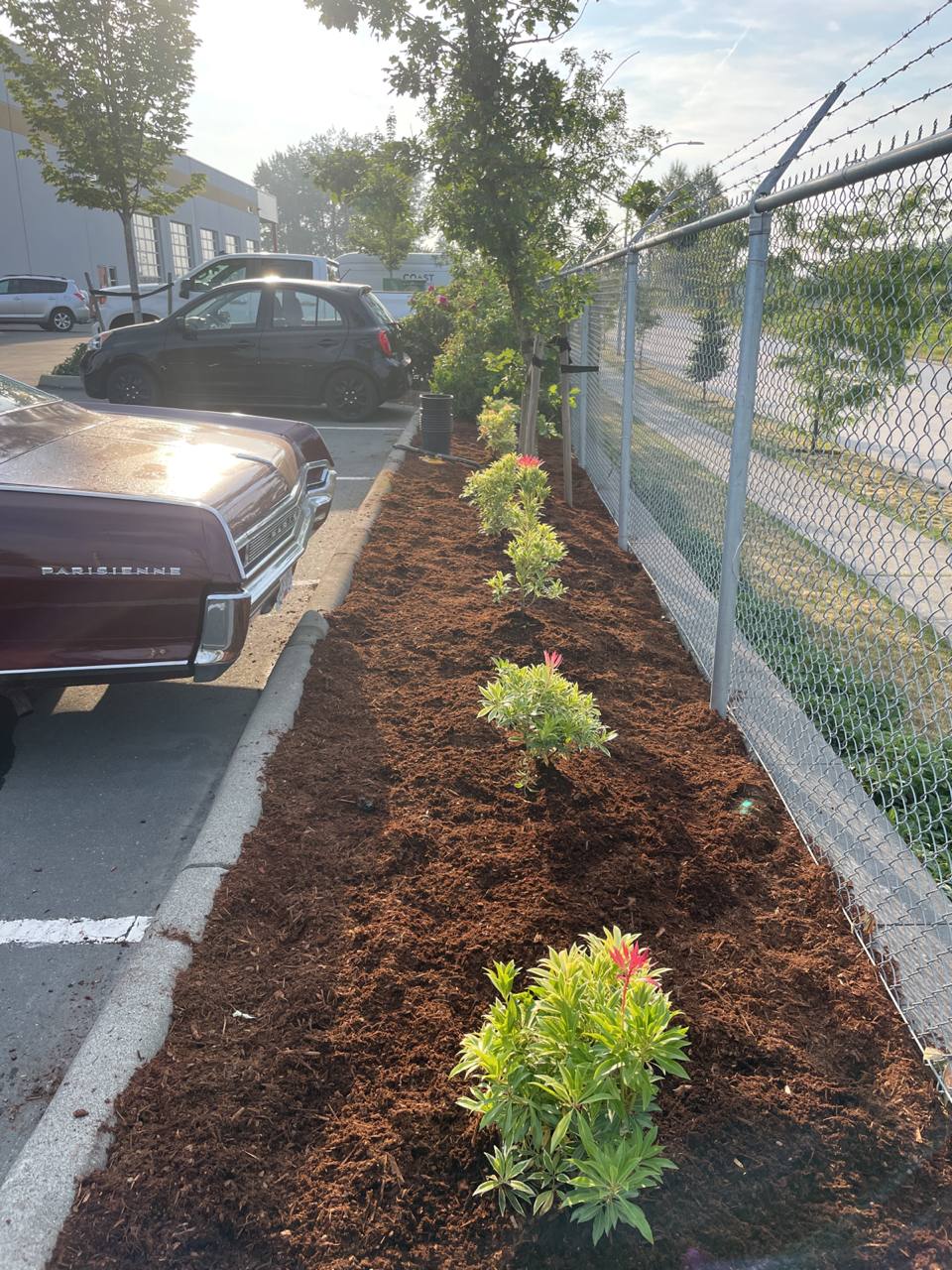
Nepeta x faassenii - catmint Catmint offers long flowering, aromatic foliage, and drought resilience. It performs well at the front of borders, on slopes to prevent erosion, and in gravelly beds. Prune after the first flush to encourage a second bloom later in the season.
Carex testacea or other ornamental sedges Carex provides evergreen structure, tolerates a range of moistures, and is surprisingly drought-tolerant in our climate when planted in part sun. Use it to soften edges, stabilize soil on gentle slopes, or replace small patches of lawn where low traffic is expected.
Armeria maritima - sea thrift Sea thrift is a compact perennial with globe-shaped flower clusters and tough, grass-like leaves. It thrives in exposed, salty air environments and tolerates dry ground. It’s excellent in rockeries, between pavers, or in planters where water runs low quickly.
Those five cover a range of textures and heights, but any robust palette should also include conifers for year-round structure, native shrubs like salal and ocean spray in appropriate spots, and a few bedding plants for seasonal color. Avoid high-water varieties such as azaleas on full-sun slopes unless you have reliable irrigation.
Practical hardscape and soil strategies that save water and look intentional Soil amendments, mulches, and hardscape all influence water retention. Importing 10 to 20 cm of quality topsoil and mixing in 20 to 30 percent compost will dramatically improve water-holding capacity while ensuring drainage. On slopes, create shallow terraces or swales that catch run-off and give water time to soak in. Permeable paving lets rain infiltrate rather than become runoff, which is especially useful on driveways and patios.
Use gravel and decomposed granite sparingly. They can produce attractive low-water surfaces but also increase heat and glare in exposed sites. A balanced composition of pavers, gravel, and planted pockets often reads better and reduces surface temperatures. For small yards, raised beds with well-draining soil make irrigation more targeted and efficient.
Short checklist for establishment watering and mulching
- water new plants deeply at planting, then every 5 to 7 days for the first month during dry weather. reduce frequency but increase depth during the second season, encouraging roots to extend. apply 5 to 8 cm of coarse mulch annually, topping up in spring if needed. remove grass or invasive groundcovers that compete for moisture before planting.
I use this routine on every project. It is straightforward yet effective. The difference between a plant that thrives and one that struggles is often not which species you choose, but whether you follow a disciplined establishment protocol.
Irrigation strategies that make sense for Vancouver homeowners Drip irrigation is my go-to for beds and shrubs. It delivers water slowly to root zones and avoids wetting foliage, which can reduce disease in some species. For small properties a simple timer and 1/4 inch tubing cost under a few hundred dollars and pay back quickly in saved water and time. Rain sensors or soil moisture sensors avoid unnecessary cycles during rainy periods.
Lawn alternatives reduce water and maintenance burdens. Native meadow mixes with limited mowing can be attractive on larger lots, while low groundcovers like thyme, sedum, or chamomile work in tighter spaces and between stepping stones. If you need a sportable surface for kids, consider a smaller artificial turf play area combined with planted edges; the periphery is where you get aesthetic value and biodiversity.
Maintenance: more intelligence, less labor Drought-tolerant landscapes are not no-maintenance landscapes. They require seasonal attention that is different from a lawn. Prune woody plants to maintain airflow, lift crowns off heavy mulch, and divide perennials every few years to keep them healthy. Control weeds early in spring; fewer competing plants means less water competition during summer.
Expect a learning curve. I recall a project in East Vancouver where the first summer a client was alarmed by slight leaf curling on southern shrubs. After stepping back we found that the roots were shallow because mulch had been piled against the stems and irrigation was infrequent. A month of corrective pruning, mulch redistribution, and two deep soakings restored vigor. Those small, fixable mistakes are common. They do not discredit drought-tolerant approaches; they underscore the need for good installation and reasonable early care.
When to hire professionals and what to ask If the yard is complex, sloped, or part of a strata property, hiring experienced landscaping services is worth the investment. Look for firms with experience in landscape installation tailored to Vancouver’s climate and who understand low-water systems. Ask potential contractors about their soil amendment strategy, plant provenance, and the irrigation plan for establishment. References with photographic before and after examples are invaluable.
Landscaping Services Greater Vancouver BC has a wide range of contractors. When you search “Landscaping near me” or request quotes, provide photos, a brief site description, and your performance goals. A reputable company, for instance Luxy Landscaping, will offer a phased plan: assessment, design, installation, and a short-term maintenance follow-up. That last step, usually three to six months after installation, is where they adjust irrigation and catch early problems.
Budgeting and return on investment Initial costs vary based on scale and materials. Replacing an entire lawn with a drought-tolerant design that includes new topsoil, irrigation, planting, and paving can range widely depending on property specifics. For many homeowner projects a mid-range estimate is several thousand to mid five-figures. Think of this as an investment. You save on annual water bills, reduce mower and labor costs, and often increase property contact us value through enhanced curb appeal. Some clients report cutting summer water use by 40 to 60 percent within two years.
Eco-benefits and neighborhood impact Neighborhoods that adopt drought-tolerant planting collectively lessen pressure on municipal water during peak demand. Local wildlife benefits when native shrubs and flowering perennials are chosen. Pollinators find nectar sources in lavender and nepeta, while birds use native shrubs for nesting and berry food. Small actions at the property scale add up.
Design considerations that keep aesthetics and ecology balanced A successful drought-tolerant garden in Vancouver should read as deliberate, not neglected. Use repetition of form and color to create cohesion. Limit the palette to three to five dominant textures so the eye can rest. Introduce seasonal interest with early bloomers and late-season seed heads that catch light. Mixing natives and well-adapted exotics broadens the visual repertoire while still remaining resource efficient.
There are trade-offs. Strictly Mediterranean schemes look spectacular in dry summers but can appear sparse in wet months if they lack evergreen structure. Native-only lists may restrict dramatic color choices. A pragmatic mix often works best: native shrubs for structure, Mediterranean and ornamental perennials for summer color, and evergreen sedges or conifers for year-round backbone.
Case study: small front yard transformation A 6-meter-wide front yard in Mount Pleasant started as compacted lawn and a cedar hedge. The client wanted water savings and curb appeal. We removed the lawn, imported 15 cm of topsoil amended with compost, installed a small drip network, and planted a sequence of lavender, carex, salal, and a single compact arbutus for focal interest. We built a permeable paver path edged with sea thrift. The established garden reduced water usage by roughly 50 percent in year two and eliminated weekly mowing. Neighbors stopped to ask about plant IDs within months; the client reported lower bills and higher satisfaction with the frontage.
Avoiding common mistakes Do not over-plant. Dense clumps retain humidity but increase competition and can promote disease. Space plants so mature forms can fill the space without constant thinning. Do not assume that a drought-tolerant label means zero water forever. Expect two seasons of care. And do not neglect soil biology. Healthy microbial life improves water retention and nutrient availability; compost applications feed that system.
Next steps if you are ready to change your landscape Walk your site at midday when the sun and wind stress reveal microclimates. Photograph north, south, east, and west-facing exposures, note areas of pooling or poor drainage, and sketch existing hardscapes. With that information, a landscape designer or landscaping services team can create a plan that balances aesthetics, budget, and water savings.
If you prefer a professional, search for firms offering landscape installation with experience in drought-tolerant plantings in Landscaping in Vancouver BC or Landscaping Services Greater Vancouver BC. Ask for a phased proposal and an establishment schedule. Firms like Luxy Landscaping that operate locally can advise on plant availability and tailor a design to your block’s character.
A closing appeal Adopting drought-tolerant landscaping in Vancouver is less about surrendering beauty and more about choosing resilient beauty. Thoughtful plant selection, proper soil work, and a short period of focused maintenance create landscapes that save water, reduce labor, and look cared for year-round. If your priorities are lower bills, less mowing, and a garden that contributes to urban ecology, a drought-tolerant approach will deliver. Start small if needed, learn the site, and expand with confidence.
Luxy Landscaping
1285 W Broadway #600, Vancouver, BC V6H 3X8, Canada
+1-778-953-1444
[email protected]
Website: https://luxylandscaping.ca/